Funky Blossom Pattern: A Designer’s Real-World Embroidery Review
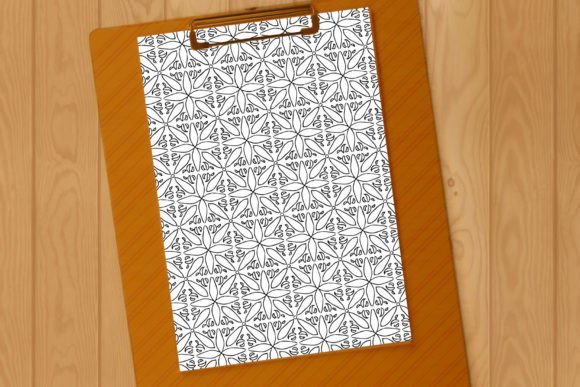
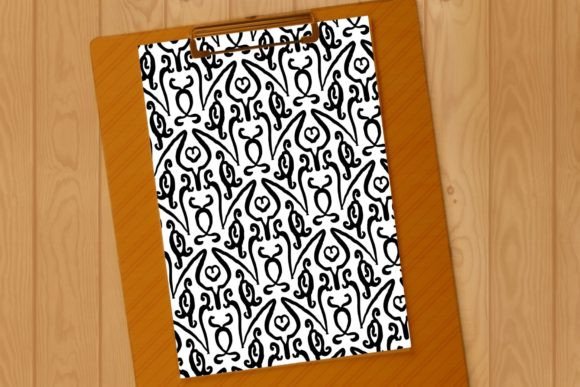
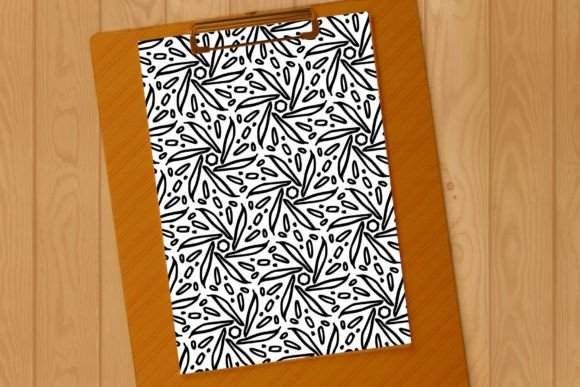
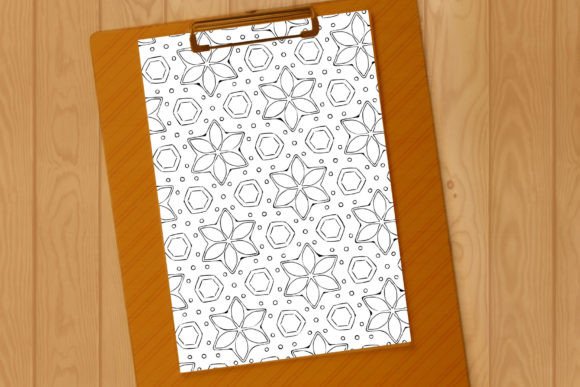
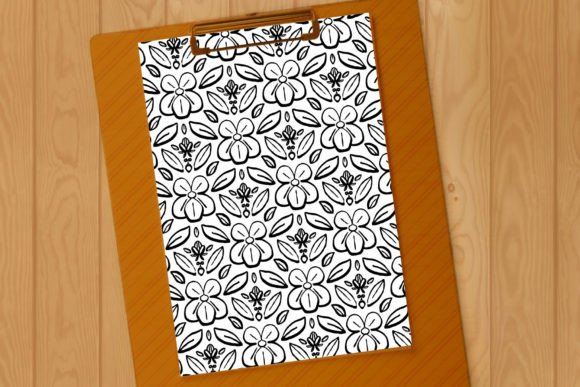
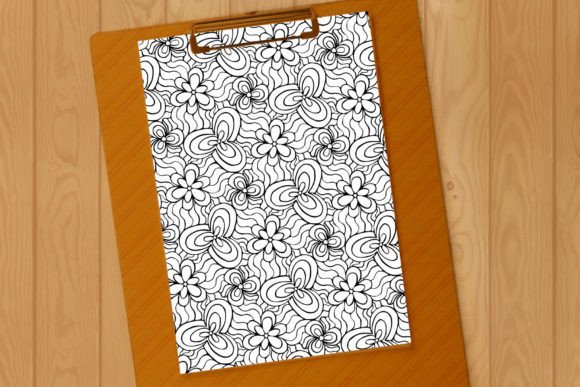
As someone who’s stitched hundreds of designs onto totes, baby onesies, aprons, and boutique sweatshirts—and who’s rejected just as many for poor stitchability—I opened Funky Blossom Pattern with cautious curiosity. This isn’t a “pretty-on-screen-only” graphic. It’s a black-and-white, hand-drawn SVG repeat pattern built around blossoms, leaves, and those delightfully off-kilter connecting shapes that scream retro charm. But does it translate to real thread on real fabric? Let’s walk through it like I would before committing to a client’s custom embroidered tote bag—or worse, an Etsy listing with 50 orders queued.
First Impression: Whimsy with Intention
The moment you zoom in, you feel the hand-drawn energy—slight line variations, organic curves, confident closures. These aren’t vector-perfect circles or symmetrical petals. They’re alive, which is exactly why this works so well for handmade product branding. The white space inside each closed-outline shape is generous—not too tight, not too sparse—giving your embroidery machine room to breathe. That’s critical when you’re stitching on textured canvas for a kitchen towel or lightweight cotton for a baby bib. Visually, Funky Blossom Pattern leans into playful sophistication: think mid-century botanical meets modern craft fair. It doesn’t shout. It invites closer looking—and that’s gold for personalized gifts and small shop merchandise.
Where It Shines: Real Projects, Real Impact
I tested Funky Blossom Pattern across three live-use cases: a linen tea towel for a local café’s holiday gift set, a unisex organic cotton sweatshirt for a boutique’s spring launch, and a set of embroidered patches for a maker’s craft fair booth. In every case, the design held up beautifully—not because it’s technically complex, but because its rhythm and spacing are inherently embroidery-friendly.
- Custom apparel: On the sweatshirt, the repeat scaled cleanly from cuff to hem. No jagged edges, no overlapping stitch clusters—even at 4.5" wide. The outline weight stayed legible without needing heavy satin stitch reinforcement.
- Embroidered patch: As a standalone motif (cut from the repeat), it stitched crisply on tear-away + cutaway stabilizer. The leaf stems and blossom centers retained definition—no bleeding or thread nesting.
- Personalized gift: Paired with a single-line monogram, Funky Blossom Pattern added visual warmth without competing. Customers commented on how “handmade” it felt—even though it was machine-embroidered.
This isn’t a design that tries to do everything. It excels where subtlety, cohesion, and tactile charm matter most: nursery decor, boutique aprons, holiday kitchen towels, wedding favor tags, and small-batch apparel. Its retro personality also gives Etsy sellers a strong visual hook—especially when paired with clean, minimal mockups.
Where to Proceed Thoughtfully
No design is universally perfect—and Funky Blossom Pattern asks for smart choices, not miracles. Here’s where attention pays off:
- Small hoop sizes (under 4"): While scalable, the connecting shapes lose nuance below 3". If stitching a cap front or baby onesie pocket, isolate one blossom + two leaves instead of forcing the full repeat.
- Stretchy or thin fabric: The open outlines rely on stable registration. Use cutaway + topping on knits or rayon blends—or convert key elements to applique design for added dimension and security.
- Dark fabric: Since it’s black-and-white, contrast depends entirely on your thread choice. Test on scrap first: matte black thread on charcoal twill reads differently than high-sheen ecru on navy denim.
- Frequent-wash items: Avoid dense fill-stitch interpretations in high-friction zones (like tote bag handles). Stick to running stitch outlines or light fill for longevity.
What It Adds to Your Finished Product—Beyond Aesthetics
Customers don’t buy patterns. They buy feeling, trust, and intention. Funky Blossom Pattern quietly elevates perceived value because it looks intentional—not templated. When used on a handmade pillow cover or personalized baby blanket, it signals care in curation, not just execution. For craft business owners, that translates to stronger brand consistency and higher repeat engagement. For Etsy sellers, it means fewer “Is this really handmade?” questions—and more “Where did you find this?” comments.
It also plays well with commercial embroidery workflows. Because it’s built from clean closed outlines (not raster fills or overlapping paths), digitizing is straightforward—whether you’re prepping for in-house machines or outsourcing to a digitizer. And since it’s SVG format, it integrates smoothly into design assets libraries, printable mockups, and digital embroidery file previews.
Practical Notes Every Embroidery Designer Should Keep Handy
Before cutting thread or uploading to your machine:
- Test Funky Blossom Pattern on scrap fabric *with your exact stabilizer stack*—especially if using textured or dark materials.
- Check thread color contrast in natural light *and* under display lighting—what reads clearly on screen may disappear on deep indigo terry cloth.
- Review stitch density: avoid overloading small blossom centers with fill stitch unless you’ve confirmed fabric stability.
- Confirm hoop size compatibility—some repeats stretch beyond standard 5x7 hoops; scale down or tile manually if needed.
- Inspect corners and connecting points at 200% zoom—look for unintended overlaps or gaps that could cause jump stitches.
- Try black-and-white mockups on both light and dark backgrounds to assess visual balance before finalizing.
- Verify licensing terms—especially if selling finished products or bundling Funky Blossom Pattern as part of a digital embroidery file pack.
In short: Funky Blossom Pattern isn’t flashy—but it’s reliable, expressive, and deeply suited to the kind of work we’re proud to put our name on. It fits seamlessly into embroidery projects that balance artistry and wearability: a linen apron for a baker, a holiday tea towel for a gift box, a baby embroidery set that feels heirloom-quality, or a boutique sweatshirt that stands out without shouting. It’s the quiet confidence in your design toolkit—the pattern that says, “I know what I’m doing,” before the first stitch even lands.