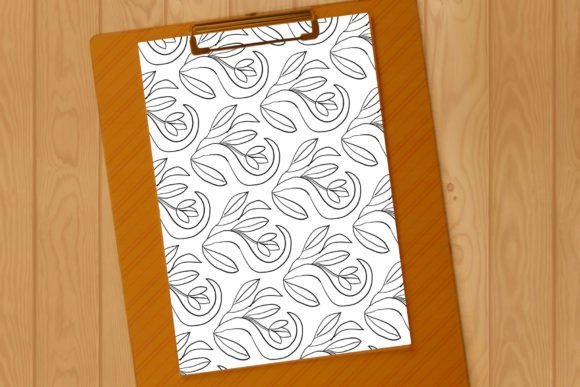
Stylized Tulips Repeat Pattern
A Clean, Airy Repeat That Breathes on Fabric
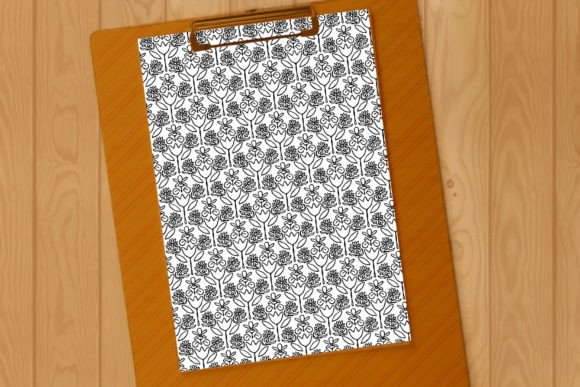
First glance at the Stylized Tulips Repeat Pattern is like opening a sketchbook mid-flow—loose, confident, and quietly intentional. It’s not photorealistic tulips; it’s the *idea* of them: simplified outlines, rhythmic spacing, and breathing room between each shape. The black-and-white, hand-drawn aesthetic gives it warmth without clutter. As an embroidery designer who’s stitched hundreds of repeats—from dense damasks to minimalist geometrics—I immediately sense its strength: it doesn’t compete with fabric texture or garment shape. It *complements*. This isn’t a design that shouts—it leans in, invites touch, and feels handmade before the needle even moves.
Where It Lives Best: Totes, Tea Towels, and Thoughtful Gifting
Last week, I used the Stylized Tulips Repeat Pattern to develop a limited-run batch of linen tea towels for a local boutique. Why this pattern? Because repeat designs live or die by rhythm and readability—and this one holds up beautifully across a 12" x 18" surface. The closed-outline tulips (with deliberate white space inside) translate cleanly into satin stitch borders or delicate running-stitch repeats. On a medium-weight linen, the design stayed crisp, legible, and soft—not stiff or overworked. Customers responded to its quiet elegance: no floral clichés, no fussy details, just botanical calm. It also worked seamlessly as a subtle border on baby swaddles and as a repeating motif along the hem of organic cotton aprons—places where subtlety reads as care.
Real-World Embroidery Behavior: What Holds Up (and What Needs Attention)
The Stylized Tulips Repeat Pattern shines on stable, medium-to-heavy fabrics: canvas totes, brushed cotton sweatshirts, structured pillow covers, and woven kitchen towels. Its open shapes mean lower stitch density than solid-fill florals—so it stitches faster, uses less thread, and lies flatter. That’s a real win for small-batch makers managing time and cost.
But let’s be direct: avoid pushing it onto stretchy knits (like lightweight t-shirts) without significant digitizing adjustments—or better yet, test stitching first with heavy cutaway stabilizer. The clean lines can blur or distort if the fabric shifts under tension. Likewise, on dark fabrics, confirm your thread color delivers enough contrast: a matte black thread on charcoal twill may read as “soft gray” unless you go for high-sheen polyester or add a light underlay. And while the pattern scales well, don’t shrink it below ~1.5" tall per tulip unit—if you do, those graceful outlines risk collapsing into muddy blobs in fill stitch or losing definition in satin stitch.
Small Hoop? Curved Surface? Think Twice—Then Test
I tried adapting a single tulip unit from the Stylized Tulips Repeat Pattern for a curved cap front. It worked—but only after repositioning the repeat to follow the dome’s natural flow and reducing stitch count manually. On caps, hats, and curved sleeves, repetition needs breathing room *between* units, not just within them. The original spacing assumes flat fabric. Also, avoid tight corners (like pocket flaps or narrow apron straps) unless you’re willing to crop or mirror sections intentionally—the pattern’s rhythm breaks when forced into awkward asymmetry.
How It Shapes Perception—of Your Product, Your Brand, Your Craft
Customers don’t buy “a floral repeat.” They buy *feeling*: calm, intention, quiet confidence. The Stylized Tulips Repeat Pattern supports that. When stitched on a handmade tote or nursery pillow, it signals thoughtfulness—not mass production. That builds trust, especially for Etsy sellers and craft fair vendors where buyers scan for authenticity. It also pairs effortlessly with neutral palettes and natural fibers, reinforcing brand cohesion for small shops focused on sustainability or slow-made values. And because it’s abstract rather than literal, it avoids seasonal fatigue—just as easily “spring” as “everyday elegance.”
Practical Designer Notes Before You Stitch
- Always test on scrap fabric first—especially if using textured weaves or blends. Linen’s slubs can catch fine outlines.
- Check thread color contrast on both light and dark backgrounds. A single tulip unit makes a great printable mockup for client approvals.
- Review stitch density in your embroidery software—this SVG-based design will need digitizing, so ensure fill areas aren’t overly dense and outlines remain crisp.
- Confirm hoop size compatibility with your intended layout. A full repeat may require a 5" x 7" hoop or larger for clarity.
- Inspect small interior curves—those white-space centers must stay open in stitch-out, not close up due to underlay or pull compensation.
- Use appropriate stabilizer: medium-weight cutaway for knits, tear-away for stable wovens, and fusible for lightweight silks or voiles.
- Verify licensing before selling finished products or digital embroidery files—this Stylized Tulips Repeat Pattern is a Graphics asset, so commercial use terms matter for your craft business.
Final Thought: Less Is Anchored, Not Empty
In a market flooded with hyper-detailed, high-density machine embroidery designs, the Stylized Tulips Repeat Pattern stands out by honoring restraint. It doesn’t try to do everything—it does one thing exceptionally well: offer rhythm, recognition, and quiet beauty that survives the stitch-out, the wash cycle, and the shelf life of a handmade product. Whether you’re designing embroidered patches for a wedding suite, building a cohesive line of boutique kitchen goods, or prepping your next Etsy listing, this pattern earns its place not as filler, but as foundation. Just remember: its power lives in how you frame it—not how much you add to it.